This article is for educational purposes only. Always consult your healthcare provider before starting, stopping, or changing GLP-1 medication.
Mounjaro and Zepbound contain the exact same active ingredient — tirzepatide — developed and manufactured by Eli Lilly. Same molecule, same injection pen, same dosing intervals. If that sounds familiar, it should: this is the same situation as Ozempic and Wegovy (both semaglutide from Novo Nordisk), but with a different manufacturer and a drug that works through a somewhat different mechanism.
Why does one molecule get two brand names? The answer is commercial and regulatory, not scientific. FDA approval pathways are indication-specific — one label for type 2 diabetes, one for obesity — and separate labeling creates separate insurance, formulary, and pricing tracks.
Understanding the distinction helps you navigate the system, access the right savings programs, and have productive conversations with your prescriber.
What Is Tirzepatide?
Tirzepatide is a dual GIP/GLP-1 receptor agonist — the first of its kind. It activates both glucagon-like peptide-1 (GLP-1) receptors and glucose-dependent insulinotropic polypeptide (GIP) receptors simultaneously. This dual action is what distinguishes tirzepatide from semaglutide and earlier GLP-1 medications.
GIP, like GLP-1, is an incretin hormone released after eating. It stimulates insulin secretion, reduces appetite, and appears to have direct effects on adipose (fat) tissue. The combination of GLP-1 and GIP activity may explain why tirzepatide produces, on average, larger weight loss than semaglutide at their respective maximum doses — though no head-to-head trial directly comparing the two at maximum approved doses has been published.
Mounjaro: The Diabetes Indication
Mounjaro received FDA approval for type 2 diabetes in May 2022. The approval was based on the SURPASS clinical trial program, a series of trials comparing tirzepatide to placebo and to active comparators including semaglutide (Ozempic 1 mg) and insulin degludec.
In SURPASS-2, tirzepatide 15 mg produced an average HbA1c reduction of 2.46 percentage points and a mean weight loss of 12.4 kg (27.3 lbs) in patients with type 2 diabetes — significantly better than semaglutide 1 mg comparator.
Approved doses: 2.5 mg, 5 mg, 7.5 mg, 10 mg, 12.5 mg, 15 mg (weekly injection) Starting dose: 2.5 mg for 4 weeks, then 5 mg, escalating every 4 weeks as tolerated
Zepbound: The Obesity Indication
Zepbound received FDA approval for chronic weight management in November 2023, making it one of the most recently approved anti-obesity medications. The approval was based on the SURMOUNT trial program.
In SURMOUNT-1 — the pivotal trial — adults with obesity (BMI ≥30) or overweight (BMI ≥27) with at least one weight-related condition achieved:
- 15 mg dose: Average 22.5% body weight loss (~52 lbs for a 230-lb person) over 72 weeks
- 10 mg dose: Average 21.4% body weight loss
- 5 mg dose: Average 16.0% body weight loss
These are the largest weight loss results reported in any Phase 3 randomized controlled trial for an obesity medication — a remarkable benchmark that has reshaped clinical expectations for pharmacological weight management.
Approved doses: Same as Mounjaro: 2.5 mg through 15 mg weekly Starting dose: 2.5 mg for 4 weeks, escalating
Side-by-Side Comparison
| Feature | Mounjaro | Zepbound |
|---|---|---|
| Active ingredient | Tirzepatide | Tirzepatide |
| Manufacturer | Eli Lilly | Eli Lilly |
| FDA indication | Type 2 diabetes | Obesity/weight management; CVD risk reduction |
| Approval year | 2022 | 2023 |
| Dose range | 2.5 mg – 15 mg | 2.5 mg – 15 mg |
| Injection | Once weekly, subcutaneous | Once weekly, subcutaneous |
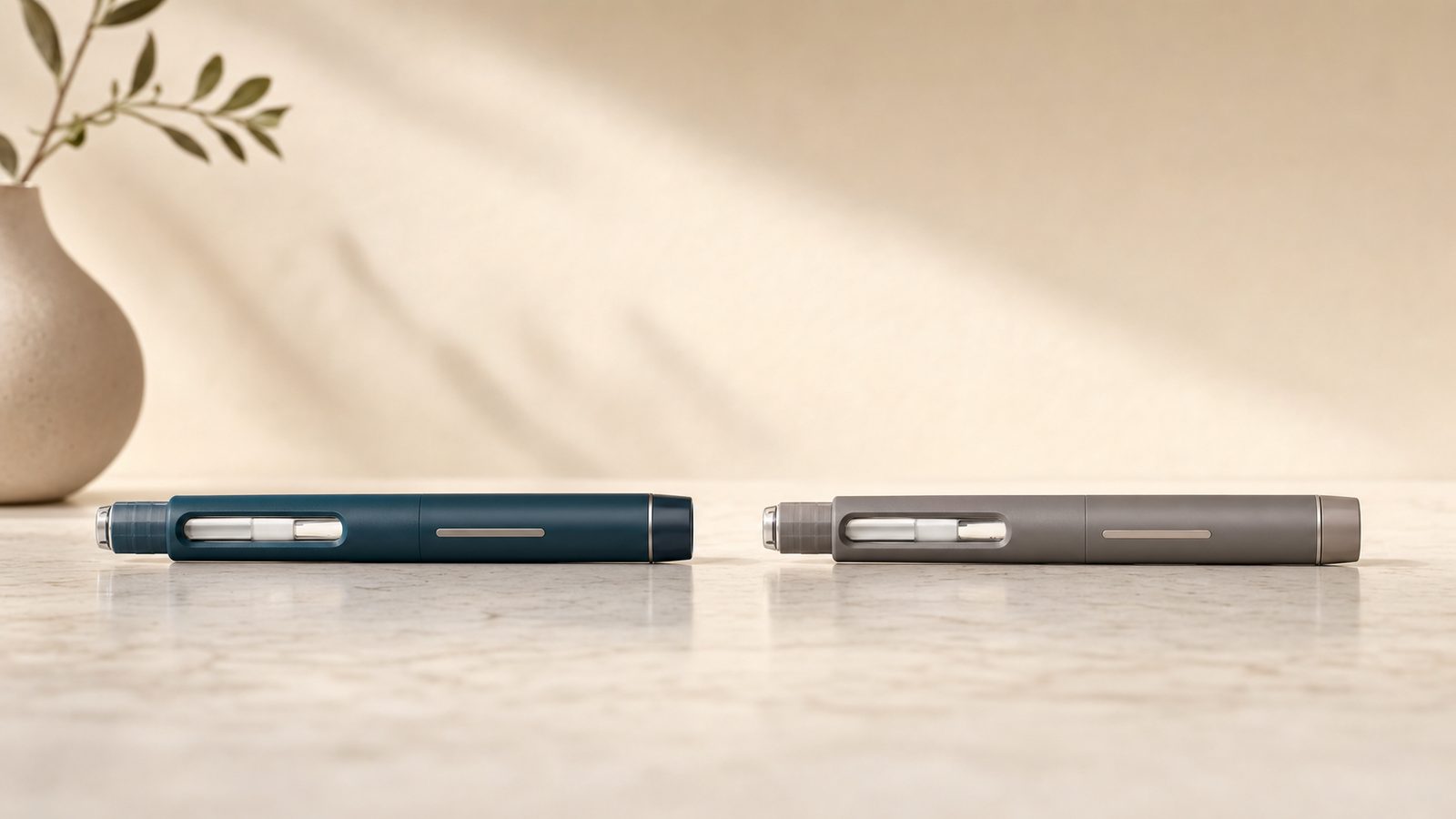
| Pen device | KwikPen | KwikPen (identical) |
| Savings card availability | Yes (for diabetes patients) | Yes (for obesity patients) |
| List price/month (approx.) | ~$1,069 | ~$1,059 |
| Medicare coverage | Part D (diabetes) | Limited; depends on plan |
Insurance Coverage: The Decisive Factor
As with the Ozempic/Wegovy situation, insurance coverage is often the deciding factor in which brand you receive.
Mounjaro Coverage
Mounjaro has been on commercial insurance formularies for type 2 diabetes since 2022. Most major payers with diabetes coverage include it. Medicare Part D covers Mounjaro for diabetes. Eli Lilly's Mounjaro savings card can reduce cost to $25–$550/month for eligible commercially insured patients, depending on their plan tier.
Zepbound Coverage
Obesity medications have historically faced coverage challenges. However, Zepbound's trajectory is improving:
- In 2024, Eli Lilly launched a self-pay program for Zepbound through its LillyDirect platform, allowing patients to pay directly for certain doses without insurance, starting at approximately $349–$499/month for lower doses.
- Several large self-insured employers have added Zepbound to their formularies since 2024, driven by health plan ROI data on obesity medication.
- Medicare coverage of Zepbound specifically for obesity remains limited as of 2026.
- Eli Lilly offers a Zepbound savings card that can reduce commercially insured costs substantially for qualifying patients.
Off-Label Use of Mounjaro for Weight Loss
Before Zepbound's approval, Mounjaro was frequently prescribed off-label for weight management in patients without diabetes — a pattern nearly identical to the Ozempic/Wegovy situation. This practice declined after Zepbound's November 2023 approval but persists in cases where:
- A patient's insurance covers Mounjaro for diabetes but not Zepbound for obesity
- Supply issues affect one product
- A prescriber prefers one product for a specific clinical reason
If you're using Mounjaro off-label for weight loss, be aware that Eli Lilly's Mounjaro savings program is designed for diabetes patients and may not apply to off-label use.
The Cardiovascular Indication for Zepbound
In late 2024, the FDA approved an additional indication for Zepbound for reducing cardiovascular risk in adults with obesity or overweight with established cardiovascular disease — mirroring the SELECT-driven expansion of Wegovy's label. This is clinically important and may further improve payer coverage, as cardiovascular indications face fewer coverage exclusions than pure obesity indications.
Compounded Tirzepatide
Following supply shortages, the FDA permitted compounding pharmacies to produce copies of tirzepatide under shortage designations. As of 2025–2026, the shortage status of Mounjaro and Zepbound has changed multiple times. Compounded tirzepatide can be significantly less expensive (sometimes $150–$300/month) but:
- Is not FDA-approved and not subject to the same quality standards as the branded products
- Has variable potency and purity across compounding pharmacies
- Cannot legally contain the same active pharmaceutical ingredient when the branded products are off the shortage list
- Should only be used under medical supervision from a licensed provider
Check with your prescriber and verify the FDA's current shortage designations at fda.gov/drugs/drug-safety-and-availability/drug-shortages before pursuing compounded options.
Use our cost estimator to compare current pricing scenarios for Mounjaro, Zepbound, and alternatives.
Which One Will You Actually Receive?
In practice, the determining factors are:
- Your diagnosis. If you have type 2 diabetes, your prescriber will likely prescribe Mounjaro. If you have obesity without diabetes, Zepbound is the indicated option.
- Your insurance. Some plans cover one but not the other, or have different tier placements.
- Your prescriber's judgment. In cases where both could be indicated, your provider will factor in clinical context, access, and cost.
- Supply. Both products have experienced periodic supply constraints. Your pharmacy may have one in stock and not the other.
From a clinical effectiveness standpoint, there is no reason to prefer one over the other — they are pharmacologically identical.
Independent Analysis: The Mounjaro / Zepbound Distinction Is a Regulatory and Commercial Artifact
Three observations from the SURPASS and SURMOUNT trial data and the FDA approval history that clarify what this dual-brand structure actually means for patients:
1. The weight loss data is from Zepbound's trials, not Mounjaro's
When headlines report tirzepatide's weight loss outcomes — 15.0%, 19.5%, and 20.9% at 5 mg, 10 mg, and 15 mg — they are citing the SURMOUNT-1 trial results, which formed the basis for Zepbound's approval. The SURPASS trials (Mounjaro's basis) studied glycemic control in type 2 diabetes populations and did report weight loss as a secondary endpoint — showing 7.0–9.5 kg average loss depending on dose in diabetic patients — but this is a different population with a blunted response. A patient with type 2 diabetes receiving a Mounjaro prescription for diabetes management will likely experience less weight loss than the headline SURMOUNT numbers, because SURMOUNT primarily enrolled non-diabetic patients with obesity. Using the SURMOUNT number to predict outcomes in a diabetic patient on Mounjaro is a systematic error that appears frequently in patient communities.
2. The coverage asymmetry creates a real-world prescribing distortion
Because many commercial insurance plans cover Mounjaro for T2DM but not Zepbound for obesity, prescribers face pressure to prescribe Mounjaro off-label for weight loss in patients who also have diabetes — even when Zepbound is the labeled choice. The coverage asymmetry is not based on pharmacology; it reflects the historical insurance exclusion of anti-obesity medication as a benefit category. This is changing — the expansion of anti-obesity medication coverage among large employers between 2023 and 2026 has meaningfully increased Zepbound coverage — but it remains inconsistently applied. Patients who are denied Zepbound coverage should ask their prescriber to check whether Mounjaro is covered under their diabetes diagnosis if they have T2DM, or whether a prior authorization appeal for Zepbound is appropriate. These are not equivalent clinical choices — one requires a T2DM diagnosis — but navigating coverage reality sometimes requires understanding the difference.
3. The vial program creates a new cost asymmetry that favors Zepbound for self-pay patients
Eli Lilly launched single-dose vials of Zepbound through LillyDirect at $349–$499/month for self-pay patients in late 2023. This program was not extended to Mounjaro. The practical result is that a patient without insurance coverage for either brand who wants tirzepatide is substantially better served by a Zepbound prescription than a Mounjaro prescription — not because the drug differs, but because the direct pricing channel exists for one and not the other. Self-pay patients receiving a Mounjaro prescription for weight loss and paying full or GoodRx-discounted prices at a retail pharmacy are paying substantially more than necessary for the same molecule. This is a coverage navigation issue, not a clinical one.
What this means for patients deciding between the two brands
For most practical purposes, ask one question: which brand does your insurance cover at the lower cost-sharing tier for your specific diagnosis? If you have T2DM, Mounjaro may be covered where Zepbound is not. If you do not have T2DM, only Zepbound is on-label for your situation. If you are self-pay, Zepbound vials through LillyDirect are the lowest-cost legal option for tirzepatide. The drug itself is identical — do not let brand names create the impression of clinical difference where none exists. See our GLP-1 cost guide for a full breakdown of savings programs and coverage pathways.
Frequently Asked Questions
Is Mounjaro the same as Zepbound?
Yes, both contain tirzepatide at identical doses (2.5 mg, 5 mg, 7.5 mg, 10 mg, 12.5 mg, 15 mg). The difference is the FDA-approved indication: Mounjaro is approved for type 2 diabetes management; Zepbound is approved for chronic weight management in adults with BMI ≥30 or ≥27 with weight-related comorbidity. The same manufacturer (Eli Lilly) produces both.
Can I use Mounjaro for weight loss if I do not have diabetes?
Mounjaro is not FDA-approved for weight loss — Zepbound is. A prescriber can legally prescribe Mounjaro off-label for weight loss, but this is unusual since Zepbound exists for that indication. The more practical issue is insurance: plans that cover Mounjaro typically require a T2DM diagnosis; prescribing Mounjaro for weight loss in a non-diabetic patient is unlikely to be covered.
Why do some insurance plans cover Mounjaro but not Zepbound?
Insurance coverage for anti-obesity medications has historically been excluded from many plan designs, while coverage for diabetes medications is standard. Because Mounjaro is labeled for T2DM and Zepbound is labeled for obesity, a plan can cover one and not the other despite them containing the same drug. This asymmetry reflects benefit design, not pharmacology. Coverage is gradually expanding for anti-obesity medications but remains inconsistent as of 2026.
What is the LillyDirect vial program and does it apply to Mounjaro?
LillyDirect is Eli Lilly's direct-to-patient self-pay program offering Zepbound single-dose vials at $349/month (2.5–5 mg) and $499/month (7.5–15 mg). This program applies only to Zepbound, not Mounjaro. Self-pay patients who want tirzepatide should request a Zepbound prescription specifically to access this pricing, rather than a Mounjaro prescription where no equivalent self-pay discount program exists.
Will switching from Mounjaro to Zepbound change my results?
No. The molecule is identical — switching brands at the same dose produces no pharmacological difference. The only reasons to switch are coverage and cost. If you are switching from Mounjaro to Zepbound because your insurance changed its formulary, or because you want access to the LillyDirect vial pricing, the clinical transition is straightforward with no re-titration needed at the same dose.
How does tirzepatide differ from semaglutide?
Semaglutide (Ozempic, Wegovy) is a GLP-1 receptor agonist only. Tirzepatide (Mounjaro, Zepbound) is a dual GIP/GLP-1 receptor agonist. GIP (glucose-dependent insulinotropic peptide) is a second incretin hormone that synergizes with GLP-1 to enhance insulin secretion and adipose fat breakdown. SURMOUNT-1 showed tirzepatide 15 mg produces approximately 20.9% weight loss vs. approximately 14.9% for semaglutide 2.4 mg in STEP 1 — a meaningful but not unlimited advantage, and only at the highest tirzepatide dose.
Are the side effects different between Mounjaro and Zepbound?
No — the side effect profile is identical because the drug is identical. GI side effects (nausea, diarrhea, constipation) occur at the same rates regardless of which brand name is on the label. SURPASS and SURMOUNT trials show comparable GI tolerability profiles at equivalent doses. Any perceived difference in side effects between patients on Mounjaro vs. Zepbound reflects individual variation, not brand difference.
Sources
- Joshi SR, et al. "SURMOUNT-1: Tirzepatide vs. Placebo for Obesity." NEJM, 2022. https://www.nejm.org/doi/full/10.1056/NEJMoa2206038
- Frías JP, et al. "Tirzepatide versus Semaglutide Once Weekly in Patients with Type 2 Diabetes (SURPASS-2)." NEJM, 2021. https://www.nejm.org/doi/full/10.1056/NEJMoa2107519
- FDA. "Mounjaro (tirzepatide) Prescribing Information." https://www.accessdata.fda.gov/drugsatfda_docs/label/2022/215866s000lbl.pdf
- FDA. "Zepbound (tirzepatide) Prescribing Information." https://www.accessdata.fda.gov/drugsatfda_docs/label/2023/217806s000lbl.pdf
- Eli Lilly. "Zepbound (tirzepatide) Prescribing Information (FDA approval letter)." https://pi.lilly.com/us/zepbound-uspi.pdf
- FDA Drug Shortages Database. https://www.fda.gov/drugs/drug-safety-and-availability/drug-shortages